


NitroShield: Making Every Kg Count
In our latest technical update Head of Agronomy, Phil Burrell, discusses everything fertiliser application and getting the most out of one of the farms most valuable inputs:
Whilst we should not wait until fertiliser prices rise to ensure we are making every kg count, ongoing global factors brings Nitrogen Use Efficiency front of mind once again.
For the majority of combinable crops financial metrics are a good starting point when it comes to determining nitrogen rates. Tools like the AHDB Nitrogen Fertiliser Adjustment Calculator are useful. As I write this blog, the calculator is saying 200 kg/ha for feed wheat, slightly lower than RB209 standard of 220 kg/ha. Therefore, if we are using reduced nitrogen rates, we must make every kg count.

Back To Basics
Going back to basics, I again mention soil pH, this is the most critical factor for optimising nutrient availability. Whilst nitrogen is less affected than other nutrients, any reduction is availability of all nutrients will lead to reduced yield and subsequent reduction in NUE.
There are many factors that will help improve NUE. I always use the principle of the 4Rs:
The Right Product
Used at the Right Rate
Applied at the Right Time
In the Right Place.
Liquid fertiliser has many key benefits, leading to improved NUE. Accuracy right to the field edge and no further. Unbeatable accuracy across the boom meaning no striping. Being in the liquid form, nutrients get into the soil quicker leading to improved uptake during periods of dry weather. These are just some of the agronomic benefits, there are many practical ones too.
GET IN TOUCH

Sulphur Utilisation
Secondly, do not forget sulphur. Sulphur is vital for a number of functions within the plant. Deposition from the atmosphere has reduced to almost nonexistent levels and subsequent soil deficiency has been increasing. Applying sulphur with each nitrogen application is the best way to feed the crop, little and often. The result of this is improved crop yield and quality, leading to improved NUE.
SULPHUR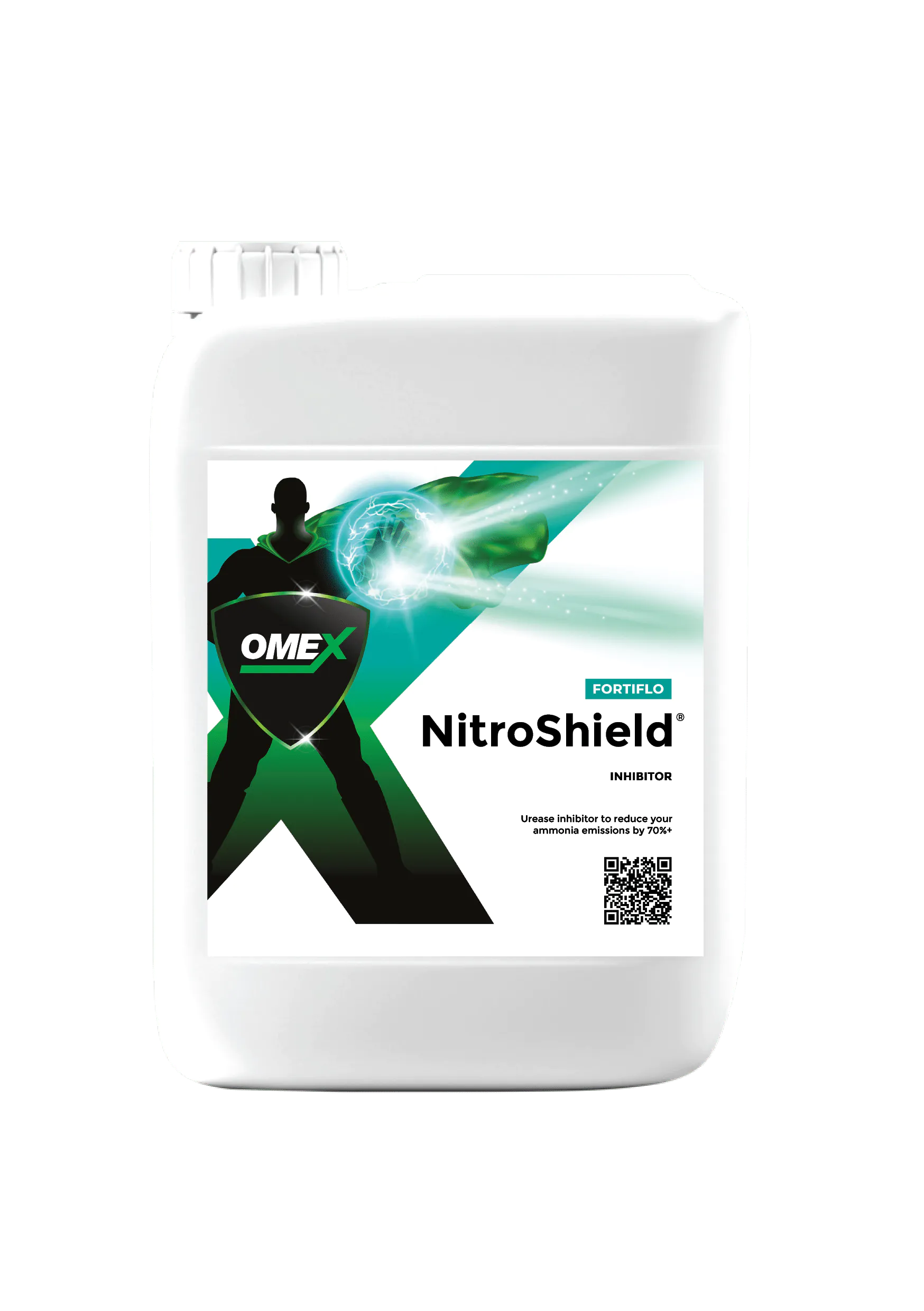
Fertiliser Emissions: Reducing Losses
A final area to consider is ammonia emissions from fertiliser applications. When DEFRA launched their Clean Air Strategy, it was very clear that agriculture accounts for around 80% of UK ammonia emissions. Whilst the majority of this comes from livestock (grazing, manures, and slurries), fertiliser applications account for 17%.
For England there is a requirement to include a urease inhibitor, such as NitroShield, with liquid fertiliser applications after the 1st of April (unless incorporated), however let’s dig beyond the guidance and look at the agronomic benefits of NitroShield.
NITROSHIELD
“I’ve heard comments that because the nitrogen price is high, dropping the inhibitor can save some money. Surely the more valuable the item the more important insurance is? Think about car insurance, if you drive a £500 beaten up Fiesta van you wouldn’t necessarily worry about fully comprehensive insurance. However, if you have a £70K Discovery commercial you would never doubt it. The good thing is our insurance (NitroShield) does not go up in cost with the value of the item you are insuring (Fertiliser).”
Phil Burrell, Head Of Agronomy

NitroShield: Making Every Kg Count
Ammonia emissions from fertiliser applications are affected by a number of factors. Firstly soil pH, alkaline soils are at a greater risk due to the presence of hydroxyl ions which means a higher percentage of ammonium is converted into ammonia gas. Crop cover is another important factor, bare soils (eg spring crop pre em applications) or thin crops (late drilled after roots) are at greater risk of ammonia volatilisation. Weather conditions at and just after application are also important. Highest risk comes from ambient temperatures above 15oC and where no rainfall is due with 24 hours after application.
NitroShield is a urease inhibitor based on the proven active ingredient NBPT. Scientific studies have concluded NBPT is the most effective urease inhibitor available. This has been backed up by many years of field experience across the globe. Local trials conducted by OMEX’s in house R&D team proved NitroShield gave the largest reduction of ammonia emissions vs other claimed inhibitors. Lab trials showed a reduction of more than 70%, meeting the DEFRA target.
GET IN TOUCH
The Evidence: Trials and Financials
Replicated trials conducted by Velcourt showed a 16:1 return on investment from an application of NitroShield, giving a margin over input cost of £85 / ha based on today’s prices. Across all UK, and European trials NitroShield has given on average 0.33 t/ha over liquid fertiliser alone.
The decision to include an inhibitor should be made on agronomic merits and financials, not driven by box ticking. As things stand today you could protect all your nitrogen for £12.70 / ha, which would need 64 kg/ha of extra yield to pay for it.
It really should be why to rather than why not to include NitroShield.
GET IN TOUCH